Architecture for autism
How do we make territorial inclusivity happen ?
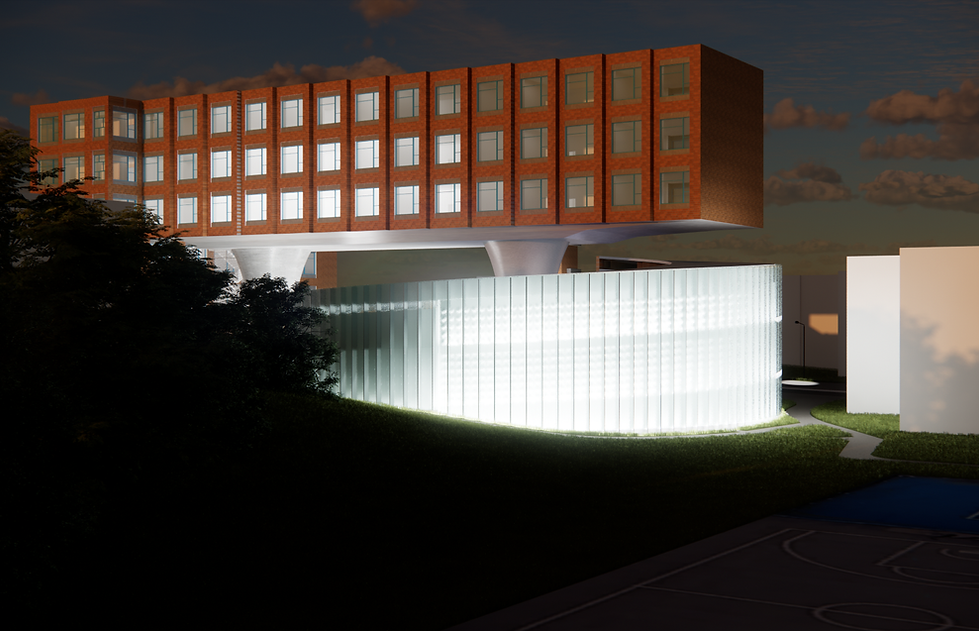
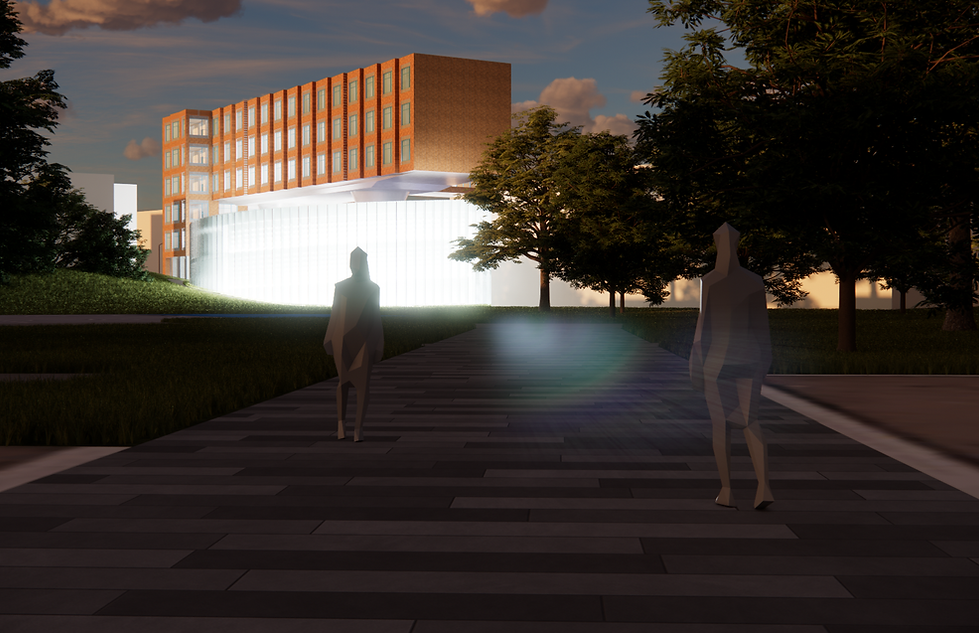
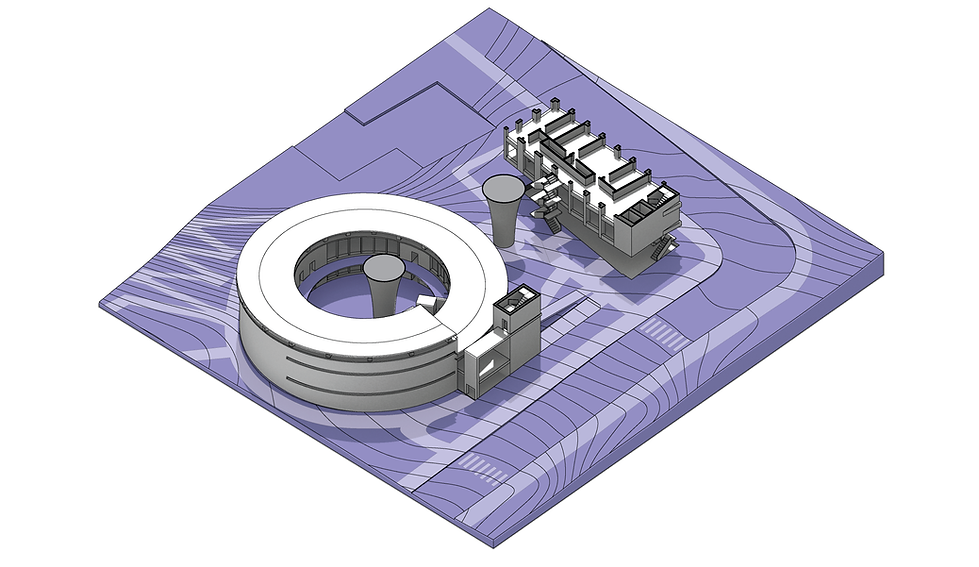
A neighbourhood of young immigrant families has security, intimacy and accessibility needs. This project provides a universally accessible early childhood education center for 96 children and 25 appartments for families and young adults.
institutional
LaSalle, Montréal
december 2025
individual project
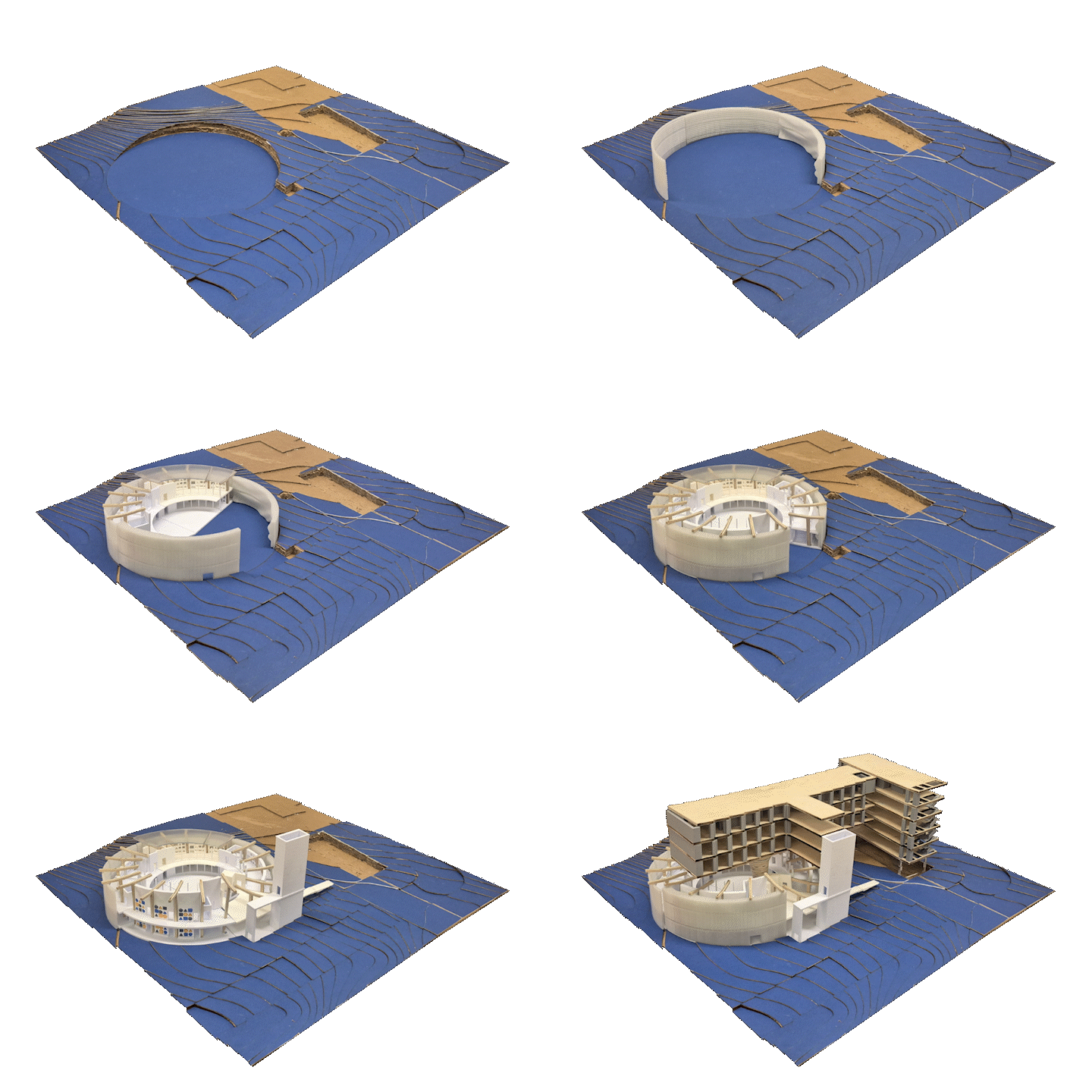
rhino 3D + Bambulab 3D prints


1 - Security
2 - Intimacy
3 - Universal accessibility
Childcare centres (CPEs) are welcoming an increasing number of children with behavioral disorders, ADHD, and on the autism spectrum (ASD). These centres receive additional funding from the Ministry of the Family (MF) to hire specialized educators. Since 2021, the MF has required one educator for every 4 children aged 0 to 18 months, for every 8 children aged 18 to 36 months, and for every 10 children aged 3 to 5 years. It should be noted that a significant proportion of ASD cases are not formally recognized, particularly among young girls.
My project proposes one educator for every three children, regardless of age, with or without a diagnosis.
The International Convention on the Rights of the Child (CRC) established in 1989 that all children have the right to be well supported and loved. For a child to be well supported, their environment must be welcoming and inclusive; for a child to feel loved, the work of educators must be facilitated by the spatial layout. This flagship project proposes an intimate working environment for educators.
According to the CRC, every child has the right to freedom of participation. To achieve this, it is necessary to design an environment that is inclusive and accessible to all children. This CPE is a flagship project for inclusion and accessibility that adapts to each child’s needs in order to strengthen their sense of identity and support their level of autonomy.